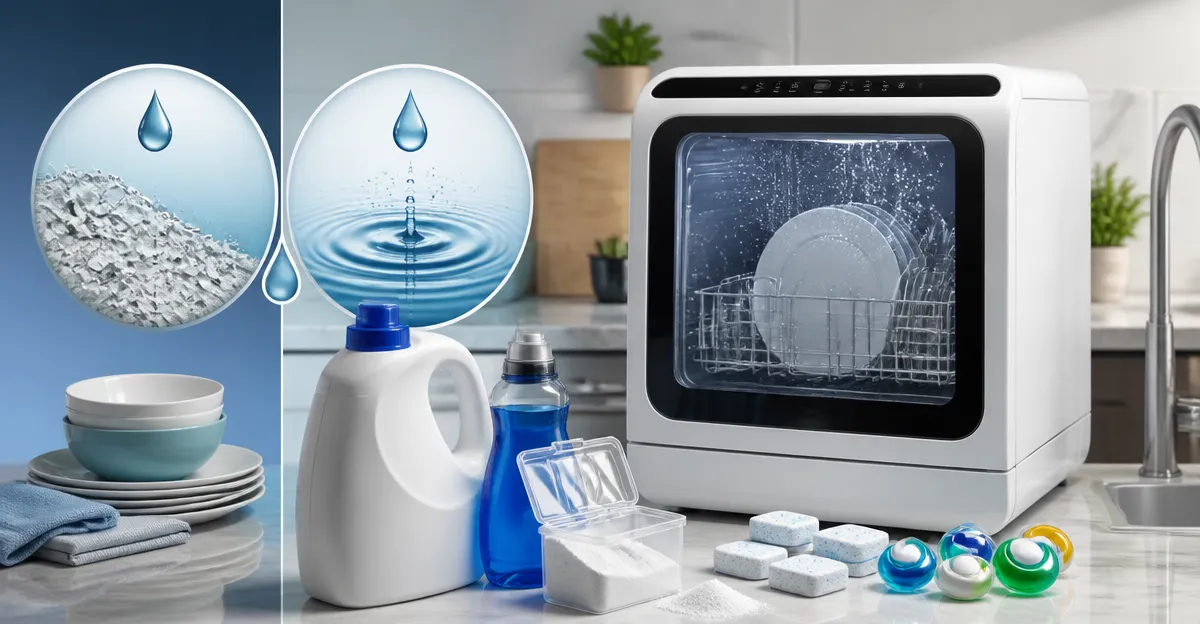
Best Detergent for Portable Dishwashers: Ultimate Guide to Hard Water vs Soft Water
Introduction
Portable dishwashers have become a practical solution for renters, tiny homes, and outdoor kitchens. This guide explains how water hardness influences detergent performance and helps readers select the most effective cleaning agent. Readers will learn the science behind hard and soft water, see side‑by‑side product comparisons, and receive actionable maintenance tips. By the end, one will be able to choose a detergent that maximizes sparkle while minimizing waste.
Background/Context
Water hardness is measured by the concentration of calcium and magnesium ions. When these minerals are abundant, they react with surfactants, forming insoluble residues known as limescale. Limescale can cloud glassware, leave film on pots, and reduce dishwasher efficiency. Soft water, by contrast, contains few minerals, allowing detergents to work at peak chemical potency.
Portable dishwashers typically use less water per cycle than built‑in models, making the water quality factor even more pronounced. Because the appliance recirculates water, any mineral buildup can accumulate quickly on spray arms and heating elements. Understanding the interaction between water type and detergent chemistry is essential for achieving a spotless clean.
Detergent formulations fall into three broad categories: powder, pod (ActionPac), and liquid gel. Each delivers cleaning agents, enzymes, and sometimes water‑softening additives. Pods provide convenience and pre‑measured dosing, powders allow precise quantity control, and gels often contain biodegradable ingredients. The choice depends on water hardness, load size, and personal preference.
Key Concepts for Portable Dishwashers
When evaluating detergents for a portable unit, consider the following concepts:
- Grease‑fighting power: Measured by the amount of surfactants such as Dawn‑derived formulas. Higher power is crucial for baked‑on residues.
- Water‑softening additives: Some detergents include built‑in water softeners that bind calcium and magnesium, preventing scale.
- Rinse aid compatibility: A rinse aid reduces spotting on glassware, especially important in hard‑water areas.
- Environmental impact: Phosphate‑free and biodegradable options lessen ecological footprint.
The table below summarizes how each product aligns with these concepts.
| Product | Form | Grease Power | Water‑Softening Additives | Phosphate‑Free | Rating |
|---|---|---|---|---|---|
| Cascade Platinum Plus Pods | Pod | 2X Dawn power | Included | Yes | 4.9/5 (10,981 reviews) |
| Cascade Complete Pods | Pod | 25% more cleaning power | None | Yes | 4.8/5 (101,607 reviews) |
| Cascade Complete Powder | Powder | High scrubbing agents | None | Yes | 4.6/5 (11,883 reviews) |
| Finish Quantum Pods | Pod | 2X grease power | Built‑in softener | Yes | 4.8/5 (45,092 reviews) |
| Cascade Free & Clear Gel | Gel | Moderate | Biobased softener | Yes | 4.7/5 (1,495 reviews) |
Choosing Detergent for Hard Water Environments
In regions where water hardness exceeds 120 ppm, mineral deposits are a frequent nuisance. Detergents that incorporate water‑softening agents or high‑efficiency surfactants are most effective. Finish Quantum Pods feature a three‑chamber design that includes a dedicated powder for breaking down scale, making them a top choice for hard water.
Their 2X grease‑fighting power, combined with a built‑in softener, reduces the need for a separate rinse aid. Users report virtually spot‑free shine on wine glasses after a single cycle, even when the dishwasher is run without a pre‑rinse. The pods also dissolve quickly, ensuring the softening agents are evenly distributed throughout the wash.
For budget‑conscious households, Cascade Platinum Plus Pods provide 2X Dawn grease power and include a proprietary softening component. Their larger liquid top delivers extra cleaning power while still fitting standard dispensers. Positive customer sentiment highlights consistent performance on baked‑on messes without any pre‑rinsing.
When a powder is preferred, Cascade Complete Powder offers a cost‑effective solution with strong scrubbing agents. Although it lacks built‑in softeners, users can add a separate water‑softening additive to the detergent compartment for optimal results.
Choosing Detergent for Soft Water Environments
Soft water (below 60 ppm) allows detergents to work at full strength, so the focus shifts to residue‑free rinsing and environmental considerations. Cascade Free & Clear Gel is formulated without chlorine bleach, dyes, or phosphates, making it an eco‑friendly option for soft‑water households.
The gel’s biobased ingredients provide gentle yet effective cleaning, and its light citrus scent avoids the overpowering fragrances found in many pods. Reviewers appreciate the absence of film on glassware and the product’s compatibility with baby bottles, a critical factor for families with infants.
For users who prefer the convenience of pods but do not need extra softening, Cascade Complete Pods deliver 25% more cleaning power than the original formula. Their Dawn‑derived surfactants cut through grease efficiently, and the lack of phosphates aligns with soft‑water best practices.
When price per load is a priority, the 78‑count pack of Cascade Complete Pods offers excellent value at $19.94, delivering consistent results across light and heavy cycles.
Comparison/Selection Guide
The following decision matrix assists readers in matching product attributes to their specific needs.
| Need | Best Product | Why |
|---|---|---|
| Hard water with heavy grease | Finish Quantum Pods | Three‑chamber design, built‑in softener, 2X grease power. |
| Hard water, desire for pre‑measured convenience | Cascade Platinum Plus Pods | 2X Dawn power, extra liquid top, phosphate‑free. |
| Soft water, eco‑friendly | Cascade Free & Clear Gel | Biobased, no phosphates, mild scent, suitable for baby items. |
| Budget‑friendly, high load volume | Cascade Complete Pods (78 count) | 25% more cleaning power, affordable per load. |
| Custom dosing, maximum control | Cascade Complete Powder | Powder allows precise measurement, strong scrubbing agents. |
When selecting a detergent, also verify that the portable dishwasher’s dispenser can accommodate the chosen form factor. Pods and gels typically fit standard compartments, whereas powders may require a dedicated detergent cup.
Best Practices & Tips
- Test water hardness using a simple test strip; values above 120 ppm indicate hard water.
- For hard water, add a rinse aid that contains citric acid to further reduce spotting.
- Run an empty cycle with a descaling solution once a month to prevent mineral buildup.
- Do not overload the portable dishwasher; proper water flow ensures detergent reaches every surface.
- When using pods, place them in the dispenser before loading dishes to avoid accidental spillage.
- If using powder, follow the manufacturer’s scoop recommendation; excessive powder can leave residue.
- Store pods in a dry environment; humidity can cause clumping, especially with the Finish Quantum Pods.
FAQ
1. Do I need a separate water‑softener for my portable dishwasher?
Only if your water hardness exceeds 180 ppm and you are using a detergent without built‑in softening agents. Products like Finish Quantum Pods already contain softeners, eliminating the need for an extra product.
2. Can I mix pods and powder in the same load?
Mixing is not recommended because it can alter the dissolution rate, leading to uneven cleaning or residue. Choose one format per load for optimal performance.
3. Are phosphate‑free detergents safe for all dishwasher interiors?
Yes. Phosphate‑free formulas protect rubber seals and metal components while still delivering strong cleaning power.
4. How often should I replace the rinse aid in a hard‑water area?
Replace the rinse aid cartridge every 30‑45 days, or when you notice water spots on glassware after a wash.
5. Is the gel version suitable for heavy‑duty cleaning?
While the gel excels at everyday loads and delicate items, heavily baked‑on food may require the extra grease power of a pod such as Cascade Platinum Plus.
6. Will using more detergent improve cleaning in hard water?
Increasing dosage does not compensate for mineral interference; instead, select a detergent with built‑in softeners or add a water‑softening additive.
7. Can I use these detergents in a manual hand‑wash basin?
Pods are designed for automatic dishwashers; for hand washing, a liquid or powder detergent is preferable to avoid residue.
Conclusion
Choosing the right detergent for a portable dishwasher hinges on understanding water hardness and the chemistry of each cleaning product. Hard‑water households benefit most from Finish Quantum Pods or Cascade Platinum Plus Pods, both of which embed softening agents and high‑grade surfactants. Soft‑water users may prefer the environmentally conscious Cascade Free & Clear Gel or the value‑driven Cascade Complete Pods. By following the best‑practice checklist and employing the comparison matrix, one can achieve spotless dishes while extending the life of a portable dishwasher.
Products Featured in This Guide
Cascade Platinum Plus Pods
Price: $24.79 | Rating: 4.9/5 (10,981 reviews)
Featured for its 2X Dawn grease‑fighting power, extra liquid top, and built‑in water‑softening additives, making it ideal for hard‑water portable dishwashers.
Cascade Complete Pods
Price: $19.94 | Rating: 4.8/5 (101,607 reviews)
Featured for its 25% extra cleaning power, Dawn‑derived surfactants, and value pack size, suitable for soft‑water environments and budget‑conscious users.
Cascade Complete Powder
Price: $6.94 | Rating: 4.6/5 (11,883 reviews)
Featured for its strong scrubbing agents, low cost per load, and flexibility in dosing, making it a solid choice for users who want precise control.
Finish Quantum Pods
Price: $17.85 | Rating: 4.8/5 (45,092 reviews)
Featured for its three‑chamber design, built‑in water softener, and 2X grease‑fighting power, ideal for hard‑water portable dishwashers.
Cascade Free & Clear Gel
Price: $9.99 | Rating: 4.7/5 (1,495 reviews)
Featured for its phosphate‑free, biobased formula and mild citrus scent, making it perfect for soft‑water households and families with sensitivities.
Frequently Asked Questions
What is the difference between hard water and soft water for portable dishwashers?
Hard water contains high levels of calcium and magnesium that cause limescale, while soft water has few minerals, allowing detergents to work at full strength.
How does water hardness affect detergent performance in a portable dishwasher?
Minerals in hard water react with surfactants, reducing cleaning power and leaving film, whereas soft water lets detergents dissolve and clean efficiently.
Which type of detergent works best with hard water in portable dishwashers?
Enzyme‑based or phosphate‑free detergents formulated for hard water are most effective, as they include builders that bind minerals.
Can I use a water softener or rinse aid to improve cleaning in hard water areas?
Yes, adding a water softener or a rinse aid helps prevent limescale and enhances detergent performance in hard water.
What maintenance tips help prevent limescale buildup in portable dishwashers?
Run a monthly vinegar or commercial descale cycle, clean the filter, and use the recommended detergent amount for your water hardness.