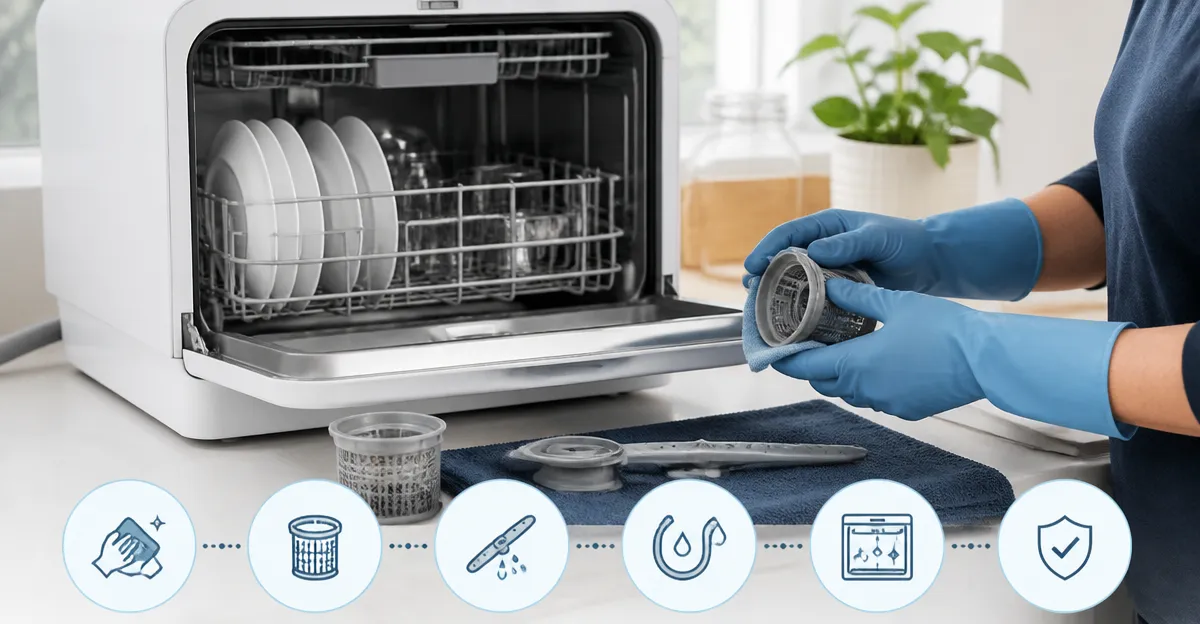
Introduction
Maintaining a portable dishwasher is essential for preserving its cleaning performance, minimizing water consumption, and extending its operational lifespan. This guide will teach the reader how to conduct regular cleaning, prevent common problems, and apply best‑practice techniques that keep the appliance running efficiently. By following the checklist, one can avoid costly repairs, reduce energy bills, and enjoy consistently sparkling dishes. The information presented is valuable for anyone who uses a countertop dishwasher in a small kitchen, RV, dormitory, or apartment.
What You’ll Need
- Soft microfiber cloths
- Non‑abrasive sponge
- White vinegar or a commercial dishwasher descaler
- Dishwasher‑safe cleaning brush
- Rubber gloves (optional for comfort)
- Access to a sink for rinsing
Step 1: Gather Materials and Inspect the Unit
Before beginning any maintenance routine, assemble all cleaning tools and ensure the dishwasher is turned off and unplugged. Verify that the power cord is free of damage and that the water inlet hose is not kinked. If the user owns the COMFEE Countertop Dishwasher, note that it offers eight wash programs, an extra‑dry function, and an Energy Star rating, making it a reliable reference model for inspection. The unit costs $278.96 and holds a rating of 4.2 out of 5 stars based on 3,659 reviews, indicating strong overall satisfaction.
Step 2: Clean the Exterior and Door Gasket
Wipe the outer surface with a damp microfiber cloth to remove fingerprints, food splatters, and dust that accumulate during daily use. Pay special attention to the door seal, as residue can cause leaks and unpleasant odors. For the AIRMSEN Portable Countertop Dishwasher, the transparent double‑layer glass door allows visual inspection of the gasket; its price of $309.99 and rating of 4.6/5 from 1,619 reviews reflect a premium build quality. Use a soft sponge soaked in warm water and a mild dish soap to gently scrub the gasket, then dry it with a clean cloth to prevent mildew growth.
Step 3: Remove and Clean the Filter
Most portable dishwashers feature a removable filter that captures food particles; a clogged filter reduces water flow and can lead to cloudy dishes. Locate the filter at the bottom of the tub, twist it counter‑clockwise, and lift it out. Rinse the filter under warm running water, using a dishwasher‑safe brush to dislodge stubborn debris. The EUHOMY Countertop Dishwasher includes a 5‑liter tank and dual spray arms; its filter design is similar, and regular cleaning helps maintain the 360° spray efficiency. After cleaning, reinstall the filter by aligning the tabs and turning clockwise until it locks securely.
Step 4: Descale the Interior
Hard water deposits can accumulate on the spray arms and heating element, reducing cleaning power and increasing energy consumption. Fill the dishwasher’s water tank with two cups of white vinegar or a commercial descaling solution, then run a short “Rinse” or “Eco” cycle without dishes. For the COMFEE Portable Countertop Dishwasher, the built‑in 5‑liter tank makes this process straightforward; the unit is priced at $249.94 and enjoys a 4.0 rating from 3,271 reviewers. The high‑temperature Hygiene program (up to 192°F) can be used after descaling to sanitize the interior.
Step 5: Clean the Spray Arms
Remove the upper and lower spray arms according to the manufacturer’s instructions; most models allow them to be lifted out without tools. Inspect each nozzle for mineral buildup; blocked nozzles impair water distribution. Soak the arms in a solution of warm water and vinegar for 15 minutes, then use a thin brush or a toothpick to clear each opening. The NOVETE Portable Countertop Dishwasher features dual spray arms that benefit from this routine; it sells for $289.99 and carries a 4.4‑star rating based on 2,511 reviews. Reattach the arms securely, ensuring they rotate freely before the next cycle.
Step 6: Verify Water Supply Connections
If the dishwasher is connected to a faucet, check that the hose is tightly clamped and free of cracks. For units that operate with a built‑in water tank, such as the AIRMSEN Portable Countertop Dishwasher, confirm that the tank is filled to the indicated level before each use. A low water level can trigger an error code and interrupt the wash cycle. Tighten any loose fittings with a wrench, but avoid over‑tightening, which could damage the hose threads.
Step 7: Run a Test Cycle and Observe Performance
After completing cleaning tasks, load a few lightly soiled dishes and select a short “Speed” or “Quick” program to verify that water sprays evenly and the drainage works correctly. Listen for unusual noises that might indicate a loose pump or worn bearing. The EUHOMY Countertop Dishwasher offers a 29‑minute Quick Wash; using this cycle provides a rapid assessment of the machine’s readiness. If the cycle completes without error messages, the maintenance routine has been successful.
Tips & Pro Tips
- Schedule a full cleaning every month and a quick wipe‑down after each use to prevent buildup.
- Use only dishwasher‑safe detergents; high‑phosphate powders can leave residues that cloud the interior.
- When loading, avoid over‑stacking plates; proper spacing ensures the 360° spray reaches every surface.
- For households with hard water, add a water‑softening tablet to the detergent compartment once a week.
- Keep a spare hose adapter on hand if you frequently move the unit between locations.
Troubleshooting
| Problem | Possible Cause | Solution |
|---|---|---|
| Dishwasher does not start | Power cord unplugged or tripped circuit | Ensure the unit is plugged in and reset the circuit breaker. |
| Water does not fill | Blocked inlet valve or low tank level | Check the inlet hose for kinks and refill the built‑in tank to the marked level. |
| Leaks around door | Damaged gasket or misaligned door | Inspect the gasket for cracks, clean it, and reseat the door firmly. |
| Dishware remains cloudy | Clogged filter or mineral buildup | Clean the filter (Step 3) and descale the interior (Step 4). |
Conclusion
By adhering to this comprehensive maintenance checklist, one can keep a portable dishwasher operating at peak efficiency for years. Regular cleaning of the exterior, gasket, filter, and spray arms prevents the most common issues and safeguards the appliance against premature wear. The recommended products illustrate how specific models incorporate features that simplify maintenance, yet the principles apply to any countertop dishwasher. Implementing the routine will result in lower utility costs, quieter operation, and consistently spotless dishes.
Products Mentioned in This Guide
Frequently Asked Questions
How often should I descale a portable dishwasher?
Descend the unit every 1–2 months, or sooner if you notice mineral buildup or cloudy water.
Can I use regular dish soap for cleaning the dishwasher interior?
No; use a non‑abrasive sponge and white vinegar or a dishwasher‑safe descaler to avoid excess suds and residue.
What are the signs that the water inlet hose needs replacement?
Look for kinks, cracks, or leaks, and check for reduced water flow or error codes during cycles.
How do I clean the spray arms without damaging them?
Remove the arms, rinse them under running water, and use a soft brush to clear any debris from the holes.
Is it safe to run a portable dishwasher without a drain hose attached?
No; the dishwasher must be properly connected to a drain to prevent water overflow and damage.